The AI signals worth acting on — and the noise to skip.
| ||

| ||
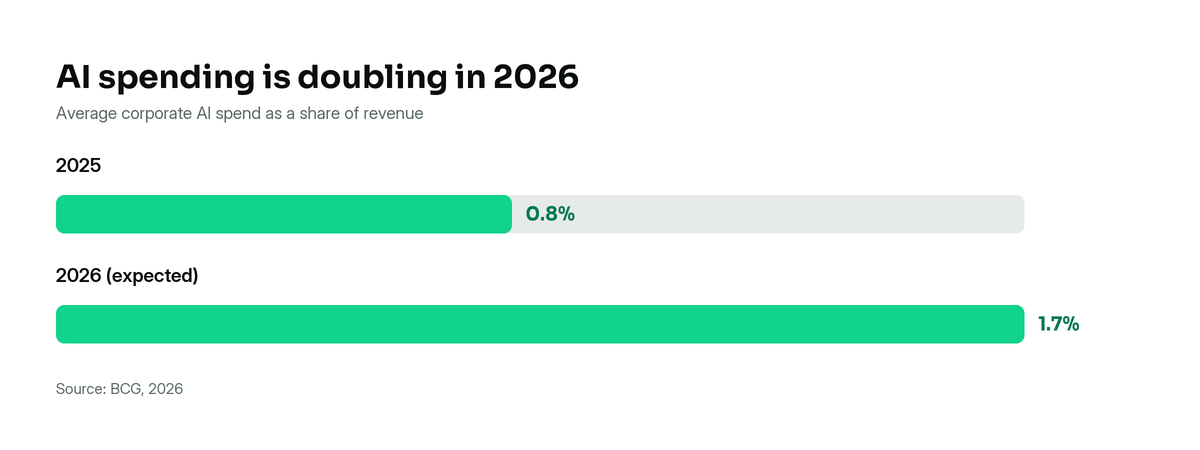
Where to actually start with AI: the 5 highest-ROI moves for 2026AI in 2026 stopped being a science experiment. The question in most boardrooms is no longer "should we try it?" — it's "show me the time saved or the money made." The numbers back that up: corporate spending on AI software is set to more than triple to roughly $270 billion this year, and a 2026 benchmark of McKinsey and Gartner data puts the average return on AI automation at 5.8× — every $1 in, $5.80 of value out. Here's the trap, though: you don't get that return by sprinkling AI everywhere. You get it by picking a few high-payback spots and measuring them honestly. Below are the five moves delivering the clearest ROI right now — and the one question to ask before each. | ||
|
By the numbers
| ||
1. Automate the back-office busyworkThe fastest wins are the unglamorous ones: invoice coding, data entry, scheduling, weekly reports. Labour-cost reduction is the single biggest driver behind that 5.8× automation ROI, and 88% of businesses now run some form of AI automation — it's mainstream, not experimental.
| ||
2. Put AI on the first line of customer supportAn AI assistant that answers FAQs, books appointments, and drafts replies — with your team handling anything sensitive — extends your hours without adding headcount. Local service businesses are paying around $500/month for an "AI receptionist" purely on the value of captured missed calls.
| ||
3. Use AI for sales & marketing first draftsDrafting emails, ad variations, and content is a high-impact, low-barrier use. AI-native agencies now spin up hundreds of ad variations end-to-end, so you can test more for the same budget. Treat it as a fast first draft your team approves — not a replacement for your brand voice.
| ||
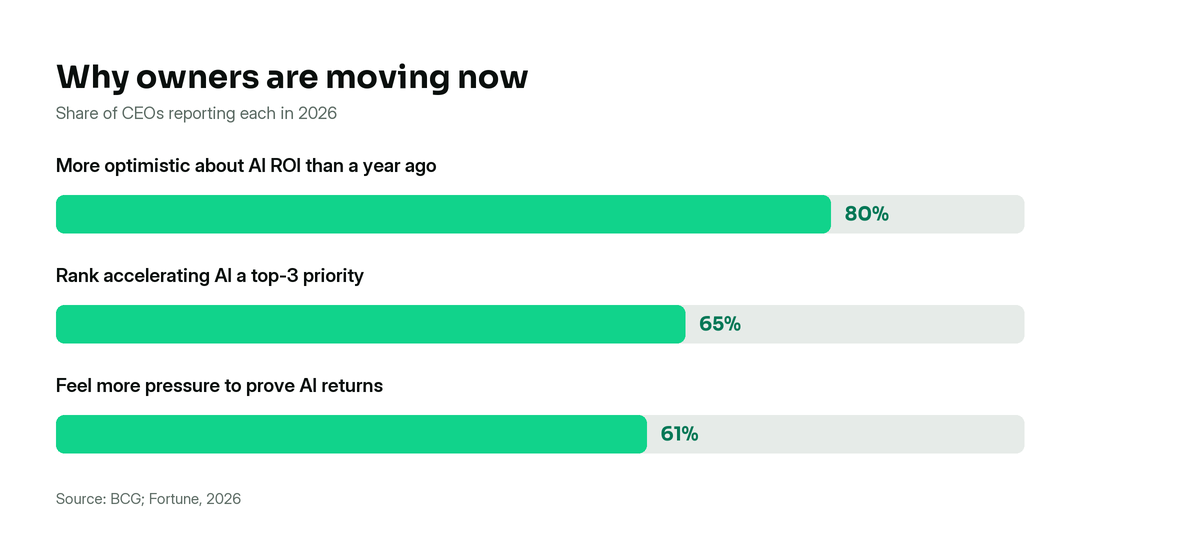
4. Turn your data into plain-language answersPoint AI at the tools you already use and ask in plain English: "Which customers are most likely to buy again this month?" or "Which products had the best margin last quarter?" Nearly all CEOs in a recent global survey expect AI to deliver measurable returns in 2026 — much of it from faster, clearer decisions.
| ||
5. Redesign one high-value workflow end-to-endThis is where the biggest returns hide. Instead of dusting AI over everything, pick a single workflow that drives real cost or revenue — quoting, onboarding, claims, intake — and rebuild it with AI at the centre. Analysts are blunt: the highest ROI comes from your most pressing problems, not the latest trend.
| ||
Your first 90 daysKeep it boringly disciplined: 1. Pick one or two outcomes, not tools ("cut admin time 30%"). You don't need a data-science team. You need clarity on where time and money leak today — and the discipline to measure. | ||
| ||
|
Sources
| ||
|
Signal over Noise — practical AI for business owners, by Ryan Alexander Black.
You're receiving this because you signed up for Signal over Noise. Unsubscribe |